
A Quarterly Publication from Wayne Barnett Software
Volume 101, 2nd Quarter 2026
The BSA Examiner is a quarterly newsletter published by Wayne Barnett Software. If you have a question to ask or a story to tell (we promise anonymity), please call us at 469-464-1902.
Case #1-Message from an Old Friend
The Case:
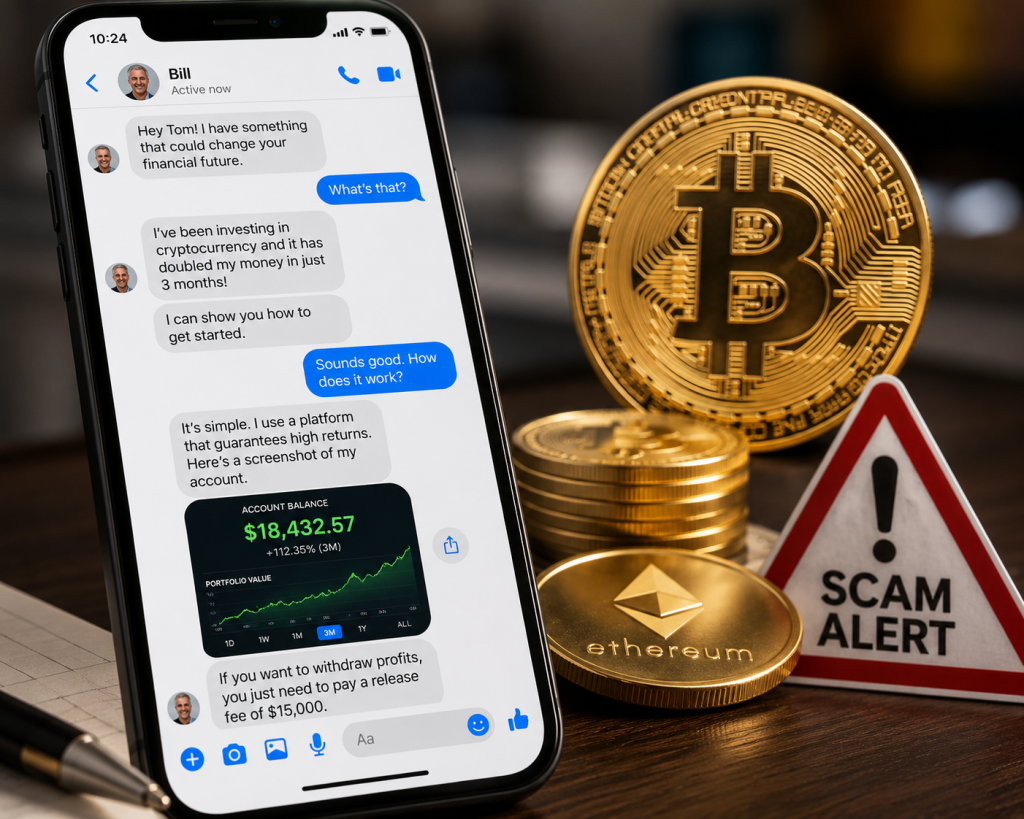
Tom, a 52-year-old farmer and longtime customer of Mainstreet bank, visits a branch office requesting a $15,000 wire transfer. When questioned about the purpose of the wire, Tom states that he is going to invest in cryptocurrency. He explains that his old friend, Bill, had contacted him through Facebook and told him about a cryptocurrency investment opportunity that had “doubled his money in three months.” Tom says he
has already invested $5,000 and has been shown screenshots indicating his account is now worth over $18,000.
To withdraw his profits, the investment company says he must first pay a “release fee” of $15,000. Rather than simply processing the transaction, the banker asked: “Have you ever actually received money back from this investment?” Tom paused. He admitted he had only seen screenshots and online account balances. The banker asked Tom if he would come into his office to discuss the matter. After they reviewed the situation, they discovered:
- The investment website had only existed for a few months.
- The company’s address was fake.
- The listed phone number was disconnected.
- Online reviews described nearly identical experiences.
The “profits” were completely fabricated. A fraudster had hacked Bill’s Facebook and was operating a cryptocurrency investment scam designed to convince victims to send increasingly larger amounts of money.
Had Tom sent the $15,000, the funds likely would have been converted into cryptocurrency and transferred to wallets
controlled by criminals overseas—making recovery extremely difficult.
By taking the time to ask additional questions and discuss the situation privately with Tom, the banker helped prevent what
appears to be a cryptocurrency investment scam. Financial institutions play a critical role in protecting customers from fraud by recognizing warning signs, educating customers about common scam tactics, and encouraging them to verify investment opportunities before sending money. In this case, the banker’s diligence may have saved Tom from losing an additional $15,000 and highlighted the
importance of proactive fraud prevention.
The Question
How do banks differentiate legitimate crypto investing from scam-related activity?
Many community bank customers are not actively seeking cryptocurrency. Instead, they
encounter crypto through:
- Social media
- Dating sites
- Text messages
- Facebook groups
Online investment advertisements
- The cryptocurrency itself is not the problem. The real risk is that criminals use digital assets because:
- Transactions can move quickly
- Transfers are often irreversible
- Funds can cross borders easily
- Victims believe they are making legitimate investments
Red flags to watch out for are:
- First time cryptocurrency activity
- Large wires to crypto exchanges
- Sudden liquidation of savings
- Guaranteed investment returns
- Pressure to act quickly
- Requests to pay fees to access funds
- Communication through WhatsApp, Telegram, or social media
Case #2- Where's My Money?
The Case: